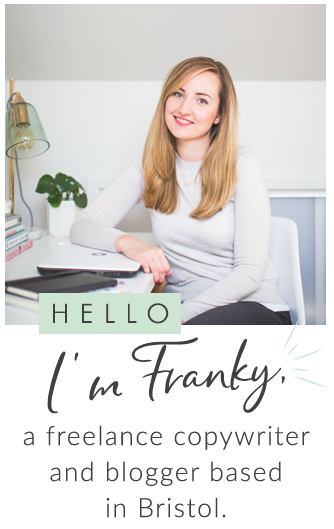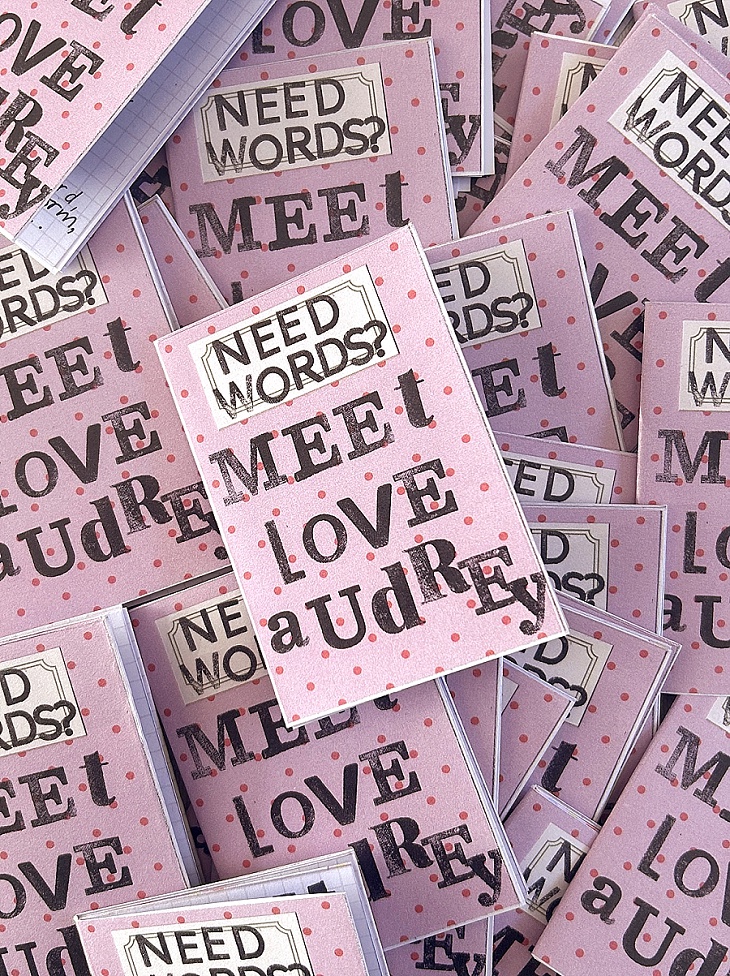
Last month, I realised I needed a new business card for an upcoming event. I knew I’d be meeting lots of artists, makers, and creatives, so I wanted something that would stand out, reflect my passion for creative play, and emphasise the power of human generated copy. Inspired by the analogue marketing trend {more on this below}, I decided to finally make a small batch of mini zine business cards.
The Analogue Marketing Trend
When Charlie and I recorded our thoughts on the analogue trend at the beginning of the year, we were primarily responding to things we were seeing from relatively small creators on Instagram and Substack. Siece Campbell’s analogue bag. Wildflower Illustration Co.’s one day a week online. Lori’s Analogue Life Project.
We chatted about what this trend might mean for small business owners, agreeing that the sudden surge of interest in ‘going analogue’ was useful data, telling us about what people want and what they feel is currently missing from their lives. We also felt it might be part of the backlash against ‘AI slop’ and the feeling we can no longer trust anything we see online.
Since this conversation, the analogue trend hasn’t gone away. I’ve been noticing it’s influence everywhere.
I was particularly inspired by Elle Fanning’s feature in Vogue Spain. The vibrant editorial for the April 2026 issue was brought to life through intricate collages and textured backgrounds created by mixed-media artist Helena Palau Arvizu.
I also loved Cyber Areej’s portfolio website hidden inside a tiny keychain. And then there’s Polaroid’s latest ad campaign, ‘The Best of Summer is Analog’.
Personally, and professionally, I’m all about human-made art, music and literature. As the internet is becoming more and more flooded with AI-generated content, I’m focussing on standing out by making my content look and sound human and handmade.
What’s a Zine?
A zine {pronounced zeen} is a small circulation booklet or magazine, often created by hand or using digital tools through self-publishing. Traditionally reproduced using photocopiers or home printers, they can be entirely hand-drawn, typed, or digitally designed.
These do-it-yourself publications have a fascinating history. There are loads of guides and free templates online if you want to give it ago. You can make a zine about anything!
Explore the links below for more inspiration:
- The Radical History of Zines
- Zinestack
- Austin Kleon’s Mini Zines
- Catherine Nguyen-Hoang’s Zine Business Card
- Bre’s Zine Business Card
How I Made My Mini Zine Business Card
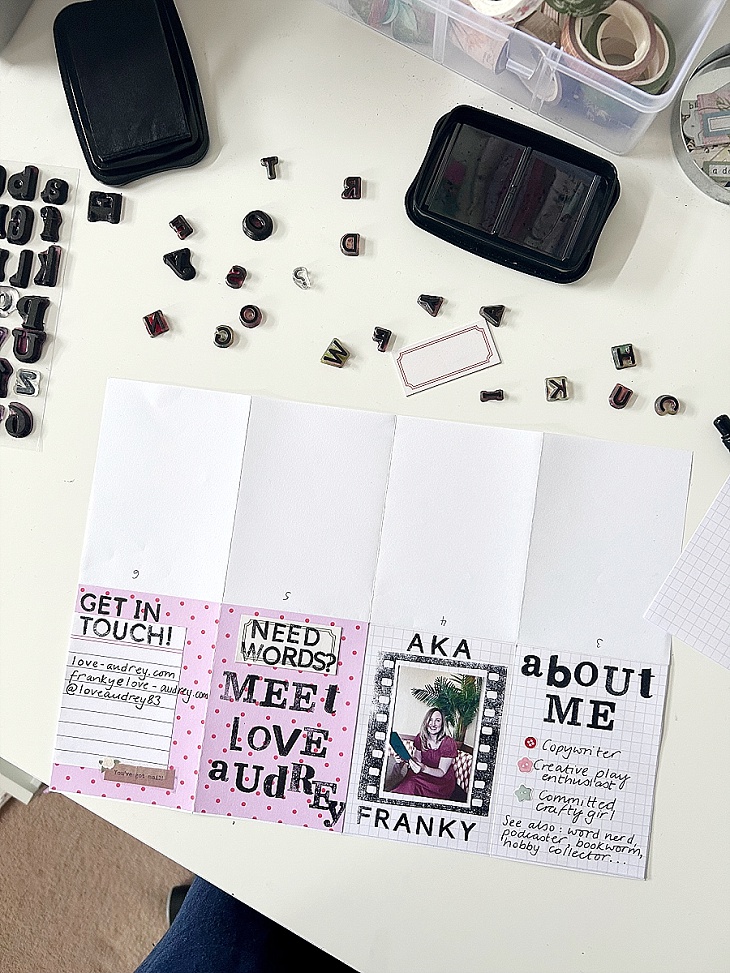
I started with a blank template and dug into my stash of patterned papers, stickers and embellishments. I decided to use a mix of stamping and my own handwriting for the text, drafting the layout and all the copy in my trusty notebook beforehand.
I had eight pages to fill. Here’s what I decided to include:
- Front Cover
- Headshot
- Brief introduction/bio
- My services/what I do
- Who I work with
- QR code with a link to my Substack publication, Larking About
- Back cover with contact details
Once I’d finished making my zine, I used my scanner to create a digital copy. It cost £37 to have 50 of them printed locally at Bristol Print Centre. Folding them was the most time-consuming part of the process, but I got through a few podcasts and found the task quite relaxing. From start to finish, I probably spent around five hours bringing this project to life.
The Response
I gave out 20 zines at On Paper Fest’s Grand Fair a couple of weekends ago and the response was really positive. Asking people if I could give them a zine felt very different to slipping someone a traditional business card. Handing it to them sparked conversation and seemed to help me forge more of an immediate emotional connection with each recipient. Hopefully, it makes me a little more memorable!
I’ve already gained a few new followers on Instagram, but offline marketing is a long game, so we’ll have to wait and see if it leads to anything exciting. My goal was to try something different and be a little braver about putting myself out there. Achievement unlocked!
One Analogue Idea = Five Pieces of Digital Content {So Far}
Handing my zines out in person was just the tip of the marketing iceberg. I’ve also created a lot of digital content around this project:
- I shared the whole process in real time on Instagram Stories. People seemed to be really invested and inspired by the idea.
- I also created a carousel post that performed well.
- I briefly mentioned the zine in my mid-year creative check-in and in an upcoming episode of Friends with Business Benefits.
- I’m blogging about the process here.
- Steve at Being Freelance kindly featured the project in one of his weekly newsletters {and he very kindly made the animated GIF featured below}.
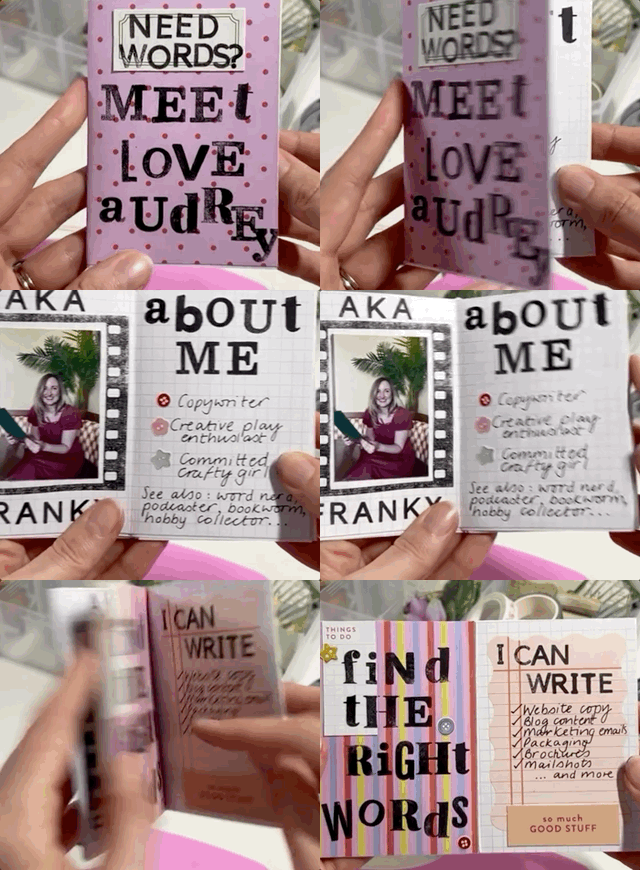
Working on this project has been a great reminder that you can turn one topic, idea or event into multiple pieces of content across different platforms.
Combining analogue and digital mediums in this way also feels like a really good fit for my brand. It reflects my values, plays to my creative strengths, and mirrors how I work. 90% of the copy I create is digital, but everything I write starts out as thoughts and ideas scribbled on the pages of a notebook.
What’s Next?
I’m going to continue giving out this current batch of zines whenever an opportunity presents itself. I’m also toying with the idea of creating another run, possibly to promote a new offer or seasonal launch. Maybe I could add another layer of analogue magic by sending them via snail mail around Christmas or in time for the new year?
When I finally launch my paid Substack offering and introduce ‘Parallel Play’, my online co-crafting sessions, my plan is to create all the promo images using a similar approach. I’ll let you know how I get on!
Love Audrey xxx