
My parents separated when I was nine years old. I remember feeling like my entire world was falling apart. I hated having to deal with so much change and for a little while I wished everything could just go back to normal.
In the end, things fell together in a way that was infinitely better than anything that had gone before. Over time, we found a new normal and now, all these years later, I wouldn’t want my family any other way.
‘But Franky,’ I hear you cry, ‘what on earth has this got to do with traditional Danish pancakes?!’
Well, one day my mum remarried.
My Bonus Dad, as I like to call him, is Danish. I don’t have a drop of Scandinavian blood in my body, but somehow aspects of his culture have become an important part of who I am. It’s strange to think I’d have missed out on such a massive part of my childhood if my parents’ marriage had survived.
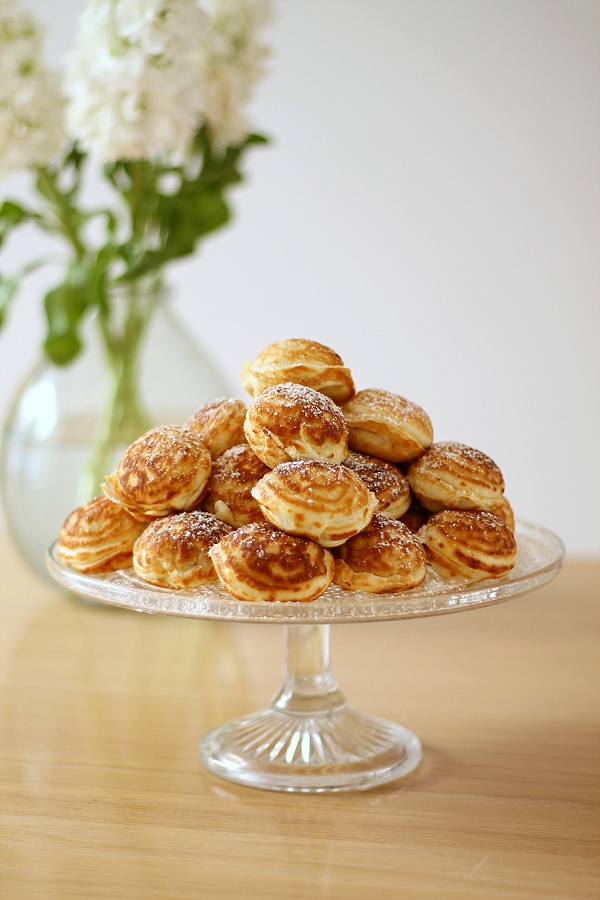
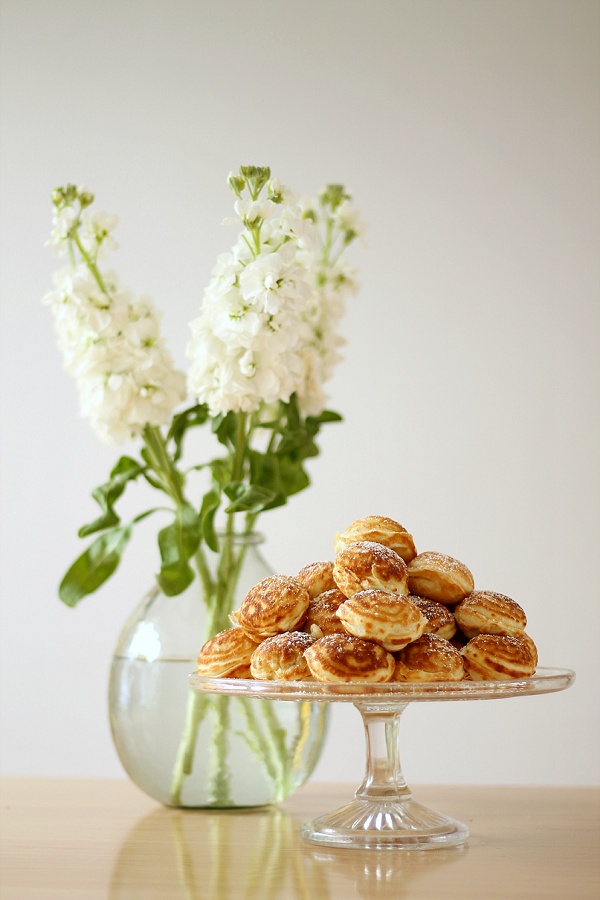
Æbleskiver are traditional Danish pancakes with a distinctive spherical shape. They’re cooked on the stove top in a special cast-iron pan*, now readily available online and well worth the investment. In Denmark, they’re common at Christmas and often served with gløgg, a Scandinavian mulled wine.
When we were children, my sister and I regularly made æbleskiver with our Bonus Dad, although we always called them ‘Danish Donuts’ at the time. The batter is fairly simple and the end result is incredibly moreish; solid like a pancake, but with a light, fluffy interior.
The recipe I’m sharing today includes warm cinnamon apple, but you can easily forego the filling and serve them dipped in jam or dusted with icing sugar and lemon zest.
You will need:
- 2 apples, peeled, cored and cubed
- 2 tbsp of butter, plus a little extra to grease your æbleskiver pan
- 2tsp cinnamon
- 2 eggs
- 1 tbsp sugar
- 250g plain flour
- 1 tsp baking powder
- 360ml buttermilk {if, like me, you never have any, be sure to read Joy’s post about the best buttermilk substitutes}
- {Makes approximately 28 æbleskiver}
1. Separate the eggs and whisk the whites until stiff peaks form. In another bowl, beat together the yolks and sugar until creamy. Sift together the flour and baking powder and then add this gradually to the second egg mixture with the buttermilk, alternating a half cup at a time. Finally, gently fold the beaten egg whites into the batter.
2. Place your æbleskiver pan on a medium-high burner and allow it to heat to the point where butter sizzles on the surface. Take care, the handle will grow very hot and it’s easy to burn yourself if you’re not careful.
3. In a separate pan, lightly saute the apple pieces in the butter until softened but still firm. Sprinkle with cinnamon and set aside.
4. Turn down the heat on your æbleskiver pan. Place a little butter in each well and use a pastry brush to coat the surface entirely. Spoon roughly 1 tsp of batter into each well, filling them half-way. Place an apple chunk on top of each one, then spoon enough additional batter to cover the fruit and fill the well to the top. Allow to cook until the edges of each pancake begin to brown and pull away from the sides of the wells.
5. Lightly run a knife or, traditionally, a knitting needle around the edge of each ball to loosen, and then flip over to cook the other side for roughly 2 minutes.
6. Place the æbleskiver on a plate and repeat until you run out of batter, remembering to butter the pan between each batch.
Do you have any foreign recipes in your repertoire? Are you a fan of Scandinavian baking?
Love Audrey xxx
*Affiliate link. Read my full disclosure here.


These look a little like the Poffertjes that were so popular here for a while. I think they are Dutch (?). I wonder how they differ from the Danish ones.
Either way, these look so morish. I imagine you are always in danger of eating the entire batch in one go. 🙂
Oh yes, they’re incredibly moreish. I made them with the children during the afternoon and by the time my husband got home there was only one left for him. Ooops!
Wow, your pancakes really look fantastic. I’ve never heard about these danish sweets before. But the recipe definitely sounds delicious. Can’t wait to try it. Thank you so much for this inspiring post!
Warm wishes, Amelie
Thank you Amelie, I hope you enjoy them if you do give the recipe a try. xxx
Dear Audrey, I live on my own and worry that if I made 28 Æbleskiver I might feel obliged to eat all of them. Any advice you can give on this weighty subject will be gratefully received. Meanwhile, eat Danishly, I say!